by cr_threeillusions | Feb 4, 2013 | Blog
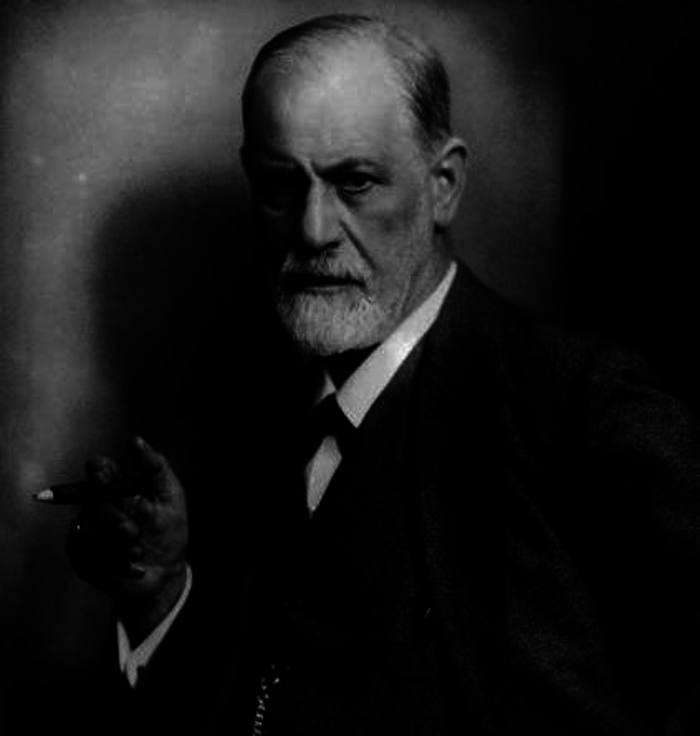
I am grateful to Árni Sigurðsson for introducing me to the conversations between Romain Rolland and Sigmund Freud. Rolland was a French dramatist, novelist, essayist, art historian and mystic who was awarded the Nobel Prize for Literature in 1915. He was also strongly influenced by the Vedanta philosophy of India, primarily through the works of Swami Vivekananda, and he shared his experiences in a series of letters to Freud. 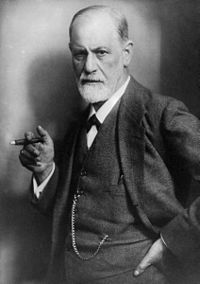
Consequently, the first chapter of Freud’s 1929 book “Civilization And Its Discontents” speaks of Rolland’s feeling of oneness with the universe. Freud then goes on to try to explain it in terms of ego.
He starts by talking about Rolland’s sense of oneness with the universe.
This was a particular feeling of which he himself was never free, which he had found confirmed by many others and which he assumed was shared by millions, a feeling that he was inclined to call a sense of ‘eternity’, a feeling of something limitless, unbounded – as it were ‘oceanic’. This feeling was a purely subjective fact, not an article of faith; no assurance of personal immortality attached to it, but it was the source of the religious energy that was seized upon by the various churches and religious systems, directed into particular channels and certainly consumed by them. On the basis of this oceanic feeling alone one was entitled to call oneself religious, even if one rejected every belief and illusion.
The universe is, by definition, eternal (because time started with the creation of the universe) and infinite (because all of space is contained within this universe), and because each of us is this entire universe, we too are eternal and infinite.
It is a feeling, then, of being indissolubly bound up with and belonging to the whole of the world outside oneself.
Normally we are sure of nothing so much as a sense of self, of our own ego. This ego appears to us autonomous, uniform and clearly set off against everything else. It was psychoanalytic research that first taught us that this was a delusion, that in face the ego extends inwards, with no clear boundary, into an unconscious psychical entity that we call the id, and for which it serves, so to speak, as a façade.
I think a whole bunch of gurus and zen masters worked out that the ego was an illusion many centuries before Freud developed psychoanalysis, but hey, let’s not pick his ego apart. 🙂
The new-born child does not at first separate his ego from an outside world that is the source of the feelings flowing towards him. He gradually learns to do this, prompted by various stimuli. It must make the strongest impression on him that some sources of stimulation, which he will later recognise as his own physical organs, can convey sensations to him at any time, while other things – including what he most craves, his mother’s breast – are temporarily removed from him and can be summoned back only be a cry for help. In this way the ego is for the first time confronted with an ‘object’, something that exists ‘out there’ and can be forced to manifest itself only through a particular action.
That seems to me like a pretty clear explanation for how the this of duality develops in a child. When we are born, before the pre-frontal cortex has finished developing, there is no sense of “me” or “not me”. There is only “everything”, being uniformly witnessed in the moment. Hunger comes and goes. Laughter comes and goes. There is no worry, no anger, no anxiety, no stress. Only being in the moment. Once the conscious mind develops, and we learn the concepts of “me” and “not me” (in other words, the ego), these negative emotions develop also.
We learn how to distinguish between the internal, which belongs to the ego, and the external, which comes from the world outside, through deliberate control of our sensory activity and appropriate muscular action.
In this way, then, the ego detaches itself from the external world. Or, to put it more correctly, the ego is originally all-inclusive, but later it separates off an external world from itself. Our present sense of self is thus only a shrunken residue of a far more comprehensive, indeed all-embracing feeling, which corresponded to a more intimate bond between the ego and the world around it. If we may assume that his primary sense of self has survived, to a greater or lesser extent, in the mental life of many people, it would coexist, as a kind of counterpart with the narrower, more sharply defined sense of self belonging to the years of maturity, and the ideational content appropriate to it would be precisely those notions of limitlessness and oneness with the universe – the very notions used by my friend to elucidate the ‘oceanic’ feeling.
For my money, this is a pretty good articulation of non-duality from Freud who also says in this chapter that he, personally, does not have the oceanic experience, although I would argue that we *all* have it as it is our original nature (as Freud himself points out in the book). We all have it – it’s just that for most people, the oceanic experience is drowned out by the chattering of the pre-frontal cortex, the monkey mind, and it’s concepts about “me” and “not me”. The quiet sense of oneness lies underneath the monkey mind, always watching, listening, accepting, staying in the moment.
We have all experienced this now and then – when playing a great game of chess, or doing yoga, or playing violin – and we notice that the chatter has stopped for a while, that we are in “the zone” or “flow”, just being NOW and DOING, without thinking about it or about ourselves.
That is the state that some of us live in permanently. And you can too.
by cr_threeillusions | Jan 29, 2013 | Blog
I was wondering today about the connection between the words “happy” and “happen”. It turns out that both derive from the old Norse word “happ” which means “good luck, chance”. A few hundred years ago, the word “happy” was used mostly as an adjective meaning lucky, as in “a happy coincidence”. If someone was “hapless”, they had no luck.
 Over time though people started to desire happiness, as if it was something you could keep with you constantly. People these days wonder why they aren’t happy. In fact, entire industries are built on trying to make people happy – from psychology to pharmaceutical to motivational speakers to advertising and consumerism.
We have taken being lucky and tried to make it a permanent state of being. Then, when it doesn’t work out the way we desire, we become UNhappy.
I would like to suggest that the secret to permanent happiness is to accept whatever happens in your stride. I like to call it HAPPENESS. When we realize that every single thing that ever happens is the result of the universal laws of physics playing out and, therefore, is exactly what HAS to happen, we can gracefully accept it. The result is a permanent state of happeness.
What if you have bad luck? The fact that you are alive at all is certainly an amazing bit of good luck. For the majority of the history of this planet, mammalian life couldn’t even survive. The fact that you were born in the small window in which mammals can survive on this planet is an amazing piece of luck. The fact that you didn’t die yesterday from any number of causes is an amazing piece of luck. Even the fact that this universe exhibits the exact properties required for suns to form, then collapse in a supernova, creating heavy elements such as carbon and oxygen, and then explode, seeding those atoms across the universe so planets like ours can form, is the ultimate piece of luck.
So, doubt not my friends, you are lucky. You have plenty of hap. Be happy with what happens. And see what happens.
by cr_threeillusions | Jan 22, 2013 | Blog
“I am he as you are he as you are me and we are all together.” – John Lennon, I Am The Walrus.
When discussing the nature of what each and everyone of us is – i.e. the undivided, eternal, infinite universe – people sometimes ask me “but what happened before the Big Bang?”
It’s a great question and something physicists would love to understand as well. But for our purposes, it’s actually a nonsensical question. The reason is that asking “before” is asking a question about time. And before this universe existed, there was no time. Remember, space and time are the same structure, which is why physicists refer to it often as “space-time” (blame Einstein). So asking what came before the universe is like asking what came before time – and there can be no “before” time.
It’s hard for us to get our mammalian brains around, because they evolved over millions of years to help us deal with shorter-term issues – like how to catch our food or how to hide from a lion. However I find it helps if you ask a similar question but taking the ‘space’ angle – as in, “Where came before the universe?” It is easier to grasp the idea that before the universe there was no space, therefore no ‘where’. As we can’t see time, it makes it a little trickier to conceive, but, again, we have to remember that space and time are the same structure.
Therefore… if the history of our universe encompasses all of time, it is eternal. And so are you, because you are the entire universe.
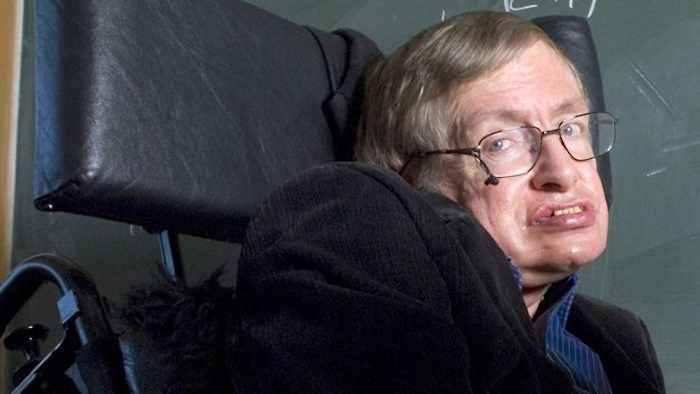
According to this Stephen Hawking book I’m reading at the moment, The Grand Design, it’s quite likely that the universe doesn’t even have a past at all – until we observe it, it’s past is just a probability containing all possible pasts. Once we observe it, we lock in a particular history. The only reality seems to be ‘right now’.
by cr_threeillusions | Jan 19, 2013 | Blog, Free Will
I’m currently reading Stephen Hawking’s most recent book (co-authored with Leonard Mlodinow) “The Grand Design” and was pleased to find the following paragraphs about free will.
“Do people have free will? If we have free will, where in the evolutionary tree did it develop? Do blue-green algae or bacteria have free will, or is their behavior automatic and within the realm of scientific law? Is it only multicelled organisms that have free will, or only mammals? We might think that a chimpanzee is exercising free will when it chooses to chomp on a banana, or a cat when it rips up your sofa, but what about the roundworm called Caenorhabditis elegans—a simple creature made of only 959 cells? It probably never thinks, “That was damn tasty bacteria I got to dine on back there,” yet it too has a definite preference in food and will either settle for an unattractive meal or go foraging for something better, depending on recent experience. Is that the exercise of free will?
Though we feel that we can choose what we do, our understanding of the molecular basis of biology shows that biological processes are governed by the laws of physics and chemistry and therefore are as determined as the orbits of the planets. Recent experiments in neuroscience support the view that it is our physical brain, following the known laws of science, that determines our actions, and not some agency that exists outside those laws. For example, a study of patients undergoing awake brain surgery found that by electrically stimulating the appropriate regions of the brain, one could create in the patient the desire to move the hand, arm, or foot, or to move the lips and talk. It is hard to imagine how free will can operate if our behavior is determined by physical law, so it seems that we are no more than biological machines and that free will is just an illusion.”
So if you don’t believe me, perhaps you’ll believe the most celebrated physicist alive today. The idea of free will is just unscientific, folks. Let it go.
Why does it matter?
As I explained in the book, most of our problems in life come from believing we, and the people around us, have free will. When you take away the concept of free will, you also take away the concepts of guilt, anger, anxiety, stress and fear, because they are mostly tied up with the idea that humans can control their decisions and actions. When we realize that this concept is nonsense, and we truly let go, those negative emotions go with them.
by cr_threeillusions | Jan 14, 2013 | Blog
My mum is visiting from Bundaberg today and we got talking about philosophy this morning over coffee (as you do). I mentioned that the universe is eternal and infinite (because it incorporates all of space and time) and she pointed out that when she was growing up, that was how the Catholic nuns described God. I agreed and said the only difference between the universe and the Christian version of God is that a) the universe isn’t interventionist (i.e. it doesn’t make exceptions to the laws of physics in the lives of favoured individuals) and b) we are not separate from it.
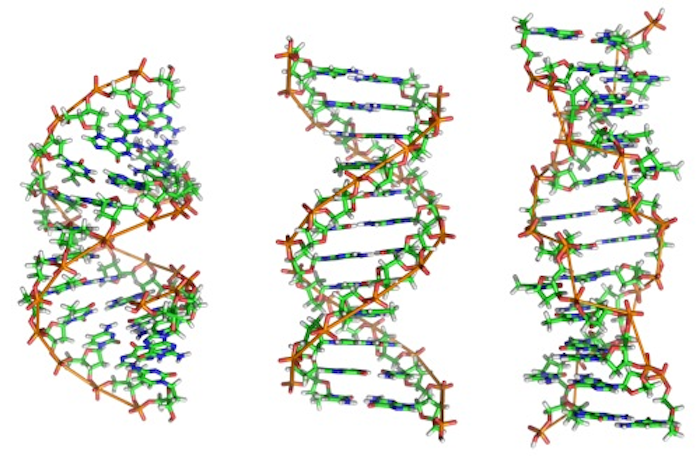
Her sticking point seems to be DNA. When I mentioned that, at an atomic level, our bodies are just constant swarms of atoms, moving in and out, coming and going, she pointed out that the constant is our DNA. Of course, for starters, the non-human DNA in our bodies out-numbers the human DNA by about 10-to-1 – so you are 90% non-human.
But even if we just look at the human DNA in our bodies, we know that it changes constantly over the course of our lives. Due to things like copying errors and interaction with free radicals, our DNA gets corrupted, leading to various maladies, the ageing process, etc. IN fact, researchers in Iceland and the U.S. showed that over a period of 10-16 years, some people’s DNA changed as much as 20%.
So, even your DNA isn’t a constant. So if you say “I am my DNA”, you’d have to decide WHICH VERSION of your DNA you are – the version you had at age 5, or the version you have now?
Anyway you slice it, you are not the same person today that you were 10 years ago. Our concept of having a solid, constant identity doesn’t stand up to analysis.
When you keep in mind that 99% of the atoms that are your body today were something (or someone) else 5 years ago and, over the course of the last 14 billion years, have been countless different animals and inanimate objects…. and before that, they were part of a distant sun…. how can your sense of being an individual entity, separate from the rest of the universe, remain intact?
by cr_threeillusions | Jan 8, 2013 | Blog, physics
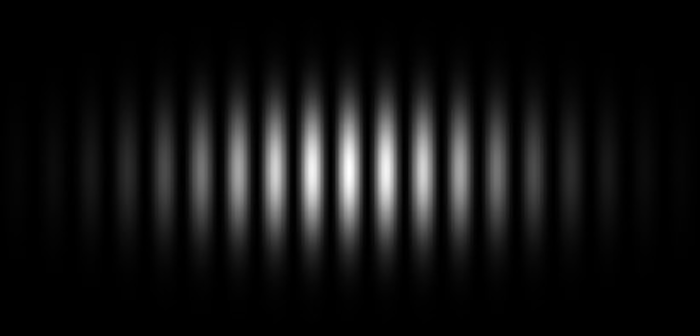
The latest edition of New Scientist has a fascinating article titled “Quantum shadows: The mystery of matter deepens” by Anil Ananthaswamy (requires free registration to read). It discusses recent experiments conducted to try (yet again) to determine why photons sometimes appear as particles and sometimes appear as waves (the famous “double slit” experiment).
In this latest experiment, researchers have removed the human interference in deciding whether or not the system is “open” or “closed”. Without trying to explain the science (because it’s way over my head), the results are fascinating. Essentially the article suggests that photons (and, by extension, all other sub-atomic particles) are NEITHER particles NOR waves. Instead, the concepts of “particles” and “waves” are ideas that we are placing on quantum particles because our brains aren’t able to understand what is truly going on. Here’s Anil’s conclusion:
It’s a notion that takes us straight back into Plato’s cave, says Ionicioiu. In the ancient Greek philosopher’s allegory, prisoners shackled in a cave see only shadows of objects cast onto a cave wall, never the object itself. A cylinder, for example, might be seen as a rectangle or a circle, or anything in between. Something similar is happening with the basic building blocks of reality. “Sometimes the photon looks like a wave, sometimes like a particle, or like anything in between,” says Ionicioiu. In reality, though, it is none of these things. What it is, though, we do not have the words or the concepts to express.
If physicists come to the conclusion that the nature of reality is something stranger than they can even conceive or have concepts to express – and you are made of that reality – what makes you think you understand what or who you truly are?
Imagine you had magic glasses you could put on that allowed you to see the world around you at the atomic level. What would you see? For a start, the outlines of your body, where it starts and stops, wouldn’t be so easy to determine. Every second, MILLIONS of atoms are leaving your body, shed from your skin and via your breath. Of course, every second your body is also ABSORBING new particles, via your breath, your food, photons entering your eyes, etc. Wouldn’t you see a huge, swirling mass of activity? The air around you, the furniture, other people, inanimate objects – would all be a mass of swirling atomic and sub-atomic activity. Surely your concept of what you are would change dramatically. Just because our senses have evolved to perceive just a minute fraction of the information that is available, should we base our identity on anything but the full picture?