by cr_threeillusions | Sep 9, 2013 | Blog, Free Will
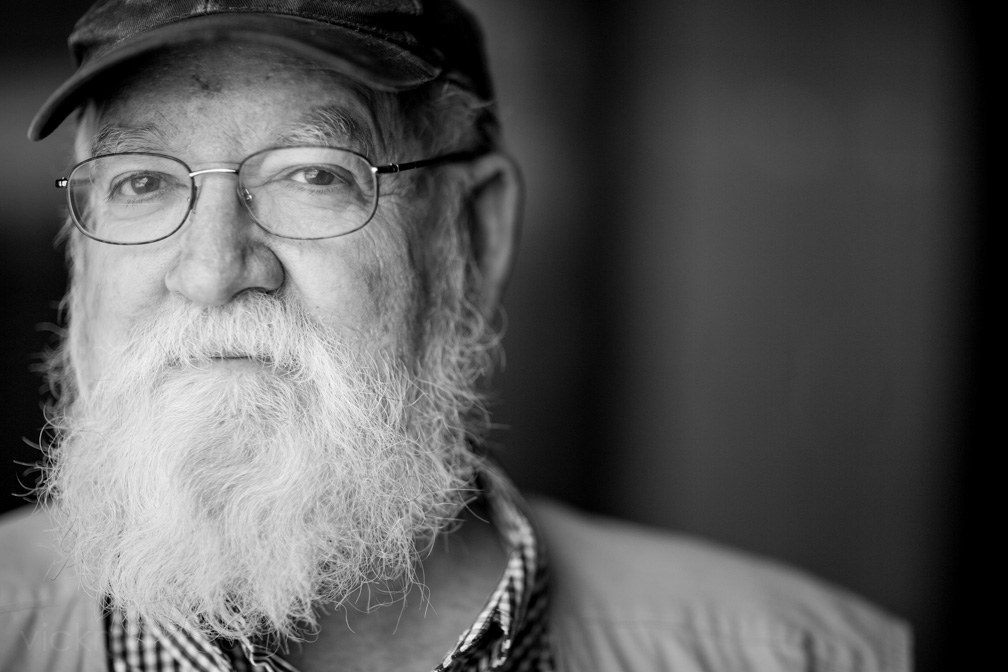
I just finished reading Daniel C Dennett’s latest book “Intuition Pumps And Other Tools For Thinking” and, while it’s overall an engaging book, his final section is just plain disappointing.
In the final chapters, Dennett attempts to demonstrate some of his “intuition pumps” (tools for improving our thinking about difficult problems) by tackling three very hard problems – evolution, consciousness and, finally, free will. It was the section on free will that disappointed me. I read it knowing full well that Dennett is a proponent of “compatibilist” free will and hoping to find, finally, a solid argument for its existence, something I could get my teeth into. Instead, I found his arguments to be sophomoric and vapid.
Daniel Dennett Intuition Pumps free will
His conclusion provides an example:
People care deeply about having free will, but they also seem to have misguided ideas about what free will is or could be (like their misguided ideas about color and consciousness). Our decisions are not little miracles in the brain that violate the physics and chemistry that account for the rest of our bodies’ processes, even if many folk think this must be what happens if our decisions are to be truly free. We can’t conclude from this, however, that then we don’t have free will, because free will in this bonkers sense is not the only concept of free will. The law, according with common sense, contrasts signing a contract “of your own free will” with signing a contract under duress or under the influence of hallucination or other mental derangement. Here is a perfectly familiar sense of free will, a distinction presupposed by many of the practices and attitudes that comprise our manifest image, that has no demonstrated dependence on the bonkers sense.
So, according to Dennett himself, we actually don’t have free will as most people think of it, i.e. the ability to make decisions and actions completely outside of cause and effect (aka the laws of physics). Don’t worry though, he says – it doesn’t matter. We still have a “sorta” free will (sorta is another of his thinking tools). He assumes that we still have some kind of free will – the kind of free will, let’s stay, that allows you to sign a contract or not sign a contract. However he never explains how this free will actually works. Aren’t these decisions also made in the brain? Isn’t the brain made of chemicals that obey the laws of chemistry? On one hand he says “yes, yes, our bodies obey the laws of chemistry” but then says “but we still have some kind of free will” – without ever attempting to explain how this works.
For hundreds of years there have been philosophers who have insisted that this sense of free will is the important sense, the one we should care about, and it is compatible with determinism, with materialism, with physics and chemistry reigning unchallenged. The intuition pumps and other thinking tools in this part are designed to support and advance the understanding of this prospect, compatibilism. It has had many versions over the years, and is probably the consensus not only among philosophers but also among judges, lawyers, and others who have to make distinctions about who is responsible for what and who is excused because they didn’t have free will when they acted. Some scientists are now challenging this consensus, and they may of course be right to do so. Let’s take a hard look at the arguments.
Maybe science is teaching us something radical, even revolutionary: that nobody is ever responsible for anything they do, and there is no sound basis for distinguishing some acts as praiseworthy and others as blameworthy. But such a revolutionary conclusion needs a lot more conscientious attention to detail than it has so far received from the scientists declaring it.
Finally, in that last paragraph, he starts to make some sense – at least up until the last sentence. Scientists have declared for several centuries that atoms obey laws of physics. Why would they need more “attention to detail” when stating that the atoms that make up our brains also obey those laws of physics?
Earlier in his chapter on free will, while discussing the views of philosopher Galen Strawson, Dennett claims that nobody has ever explained to him why it matters that we don’t have perfectly free will.
I don’t establish the kind of free will most people want to believe in, and I know it. But I think they are wrong to want to believe in it, and wrong to believe in it if they do. The burden falls on Strawson and others to show why we ought to care about ultimate responsibility—or the determinism/indeterminism issue—in our lives.
So Dennett is basically saying “okay the science says we don’t have free will – but unless someone explains why that’s important, we should keep believing we “sorta” have it.” That’s just dumb.
By the way, the “why” is quite easy – and anyone with half a brain who has thought about free will for an hour will realise it.
If we accept that our thoughts, decisions and (therefore) actions are all determined by the laws of physics and chemistry, then we need to re-think all of our emotional and legal connections to the idea of free will.
The legal perspective is obvious – if people aren’t ultimately responsible for their actions, we need to treat criminals as ‘broken’ instead of ‘bad’ (which reminds me – it’s a new episode of Breaking Bad tonight, but that’s another story…). How we treat a broken person (treatment and containment) would be different to how we treat a bad person (punishment).
The more important issue, however, is our emotional connection to free will. If you and the people around you aren’t truly in control of their actions, then what reason do you have to feel guilt, regret or anger? Everybody you know (and that includes you) is just fulfilling their biological programming. How can you be angry at someone who is just obeying their programming? How can you be angry at yourself for obeying yours? Why would you regret past decisions you did or didn’t make if you totally understood that those decisions were 100% programmed by your chemistry?
I remain a fan of Dennett as a philosopher and thinker, but his views on free will are, unfortunately, too similar to religious belief. He obviously wants to believe that we have some sort of free will and therefore is prepared to, if not ignore the science, dismiss the science as irrelevant. It’s right up there with the God of the gaps. We might call it “free will of the gaps”.
by cr_threeillusions | Jan 19, 2013 | Blog, Free Will
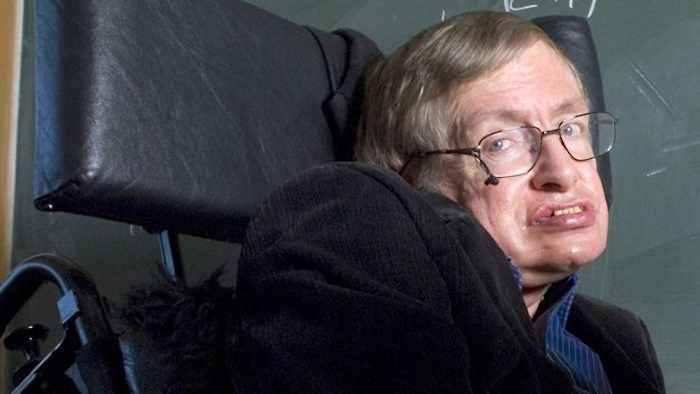
I’m currently reading Stephen Hawking’s most recent book (co-authored with Leonard Mlodinow) “The Grand Design” and was pleased to find the following paragraphs about free will.
“Do people have free will? If we have free will, where in the evolutionary tree did it develop? Do blue-green algae or bacteria have free will, or is their behavior automatic and within the realm of scientific law? Is it only multicelled organisms that have free will, or only mammals? We might think that a chimpanzee is exercising free will when it chooses to chomp on a banana, or a cat when it rips up your sofa, but what about the roundworm called Caenorhabditis elegans—a simple creature made of only 959 cells? It probably never thinks, “That was damn tasty bacteria I got to dine on back there,” yet it too has a definite preference in food and will either settle for an unattractive meal or go foraging for something better, depending on recent experience. Is that the exercise of free will?
Though we feel that we can choose what we do, our understanding of the molecular basis of biology shows that biological processes are governed by the laws of physics and chemistry and therefore are as determined as the orbits of the planets. Recent experiments in neuroscience support the view that it is our physical brain, following the known laws of science, that determines our actions, and not some agency that exists outside those laws. For example, a study of patients undergoing awake brain surgery found that by electrically stimulating the appropriate regions of the brain, one could create in the patient the desire to move the hand, arm, or foot, or to move the lips and talk. It is hard to imagine how free will can operate if our behavior is determined by physical law, so it seems that we are no more than biological machines and that free will is just an illusion.”
So if you don’t believe me, perhaps you’ll believe the most celebrated physicist alive today. The idea of free will is just unscientific, folks. Let it go.
Why does it matter?
As I explained in the book, most of our problems in life come from believing we, and the people around us, have free will. When you take away the concept of free will, you also take away the concepts of guilt, anger, anxiety, stress and fear, because they are mostly tied up with the idea that humans can control their decisions and actions. When we realize that this concept is nonsense, and we truly let go, those negative emotions go with them.
by cr_threeillusions | Sep 10, 2012 | Blog, Free Will
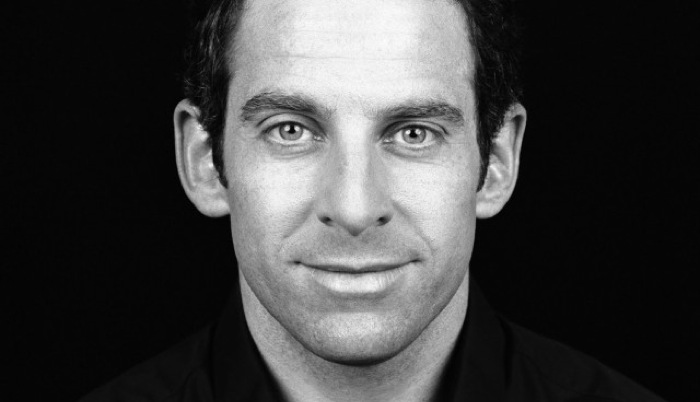
Sam Harris has posted a new article today called “Life Without Free Will“.
He starts off:
One of the most common objections to my position on free will is that accepting it could have terrible consequences, psychologically or socially. This is a strange rejoinder, analogous to what many religious people allege against atheism: Without a belief in God, human beings will cease to be good to one another.
And concludes:
Recognizing that my conscious mind is always downstream from the underlying causes of my thoughts, intentions, and actions does not change the fact that thoughts, intentions, and actions of all kinds are necessary for living a happy life—or an unhappy one, for that matter.
I haven’t been noticeably harmed, and I believe I have benefited, from knowing that the next thought that unfurls in my mind will arise and become effective (or not) due to conditions that I cannot know and did not bring into being. The negative effects that people worry about—a lack of motivation, a plunge into nihilism—are simply not evident in my life. And the positive effects have been obvious. Seeing through the illusion of free will has lessened my feelings of hatred for bad people. I’m still capable of feeling hatred, of course, but when I think about the actual causes of a person’s behavior, the feeling falls away. It is a relief to put down this burden, and I think nothing would be lost if we all put it down together. On the contrary, much would be gained. We could forget about retribution and concentrate entirely on mitigating harm. (And if punishing people proved important for either deterrence or rehabilitation, we could make prison as unpleasant as required.)
by cr_threeillusions | Sep 9, 2012 | Blog
Lawrence Krauss a Canadian-American theoretical physicist who is a professor of physics, Foundation Professor of the School of Earth and Space Exploration, and director of the Origins Project at Arizona State University. He is the author of several bestselling books, including The Physics of Star Trek and A Universe from Nothing. He is an advocate of scientific skepticism, science education, and the science of morality.
Here’s what he had to say about free will in a recent article in The Guardian:
“Moreover, that many moral convictions vary from society to society means that they are learned and, therefore, the province of psychology. Others are more universal and are, therefore, hard-wired – a matter of neurobiology. A retreat to moral judgment too often assumes some sort of illusionary belief in free will which I think is naive.”
It’s been my experience that when someone genuinely stops believing in free will, there are a plethora of emotional and psychological benefits that follow. The most fascinating thing, to me, about the belief in free will is that when you actually look at it, it’s so completely and obviously bullshit. Anyone who has meditated will know that even when you are trying not to think, thoughts still appear in your head willy-nilly. You can’t turn them off at whim. All of us, I’m sure, have had the experience of trying to get to sleep at night and not being able to “switch off”. If we had control of the thought process, surely this would be simple – yet we find it’s impossible.
So it should be obvious to us that we aren’t in control of our thoughts, and yet the majority of people continue to believe that they are – and that creates problems, myriad problems. So many emotional problems are connected to the idea of having free will. Guilt, anger and regret cannot exist without the idea of free will. Why wouldn’t we all want to live without guilt, anger and regret?
We can and it’s so simple, it’s ridiculous. All we need to do is pay attention to the fact that free will doesn’t exist and hey presto – those emotions disappear. They have to – they have no foundation left to build upon.
by cr_threeillusions | Mar 22, 2012 | Blog
A hot topic for several thousand years, the question of whether free will exists may never be settled to everyone’s satisfaction. But in a series of new articles for the Chronicles of Higher Education, six academics from diverse fields offer fresh perspectives from the standpoints of modern neuroscience and philosophy. Ultimately, they voted 4-2 in favor of the position that free will is merely an illusion.
The four scientists on the panel denied the existence of free will, arguing that human behavior is governed by the brain, which is itself controlled by each person’s genetic blueprint built upon by his or her life experiences. Meanwhile, the two philosophers cast the dissenting votes, arguing that free will is perfectly compatible with the discoveries of neuroscience.
(link)