Three Illusions Video #3
Answering questions about free will from the Facebook group.
Answering questions about free will from the Facebook group.
A short video (about 10 minutes) talking about what life is like after the realisation that we are nothing but atoms.
If you have ideas for subjects or questions for future videos, let me know in the comments section.
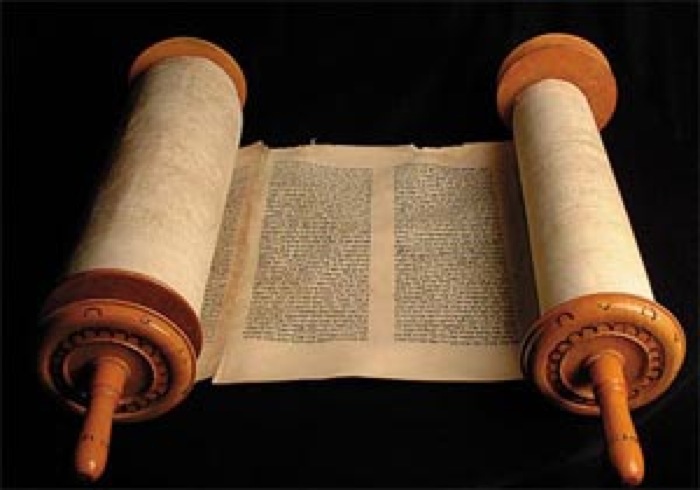
I thought it might be interesting to quickly review some of the most famous scriptures and writings from various religions and gurus to see how they map against the science discussed in the Three Illusions book. It is, of course, easy to overlay any framework onto many of the ancient writings, as they tend to lend themselves to multiple understandings. So I’m definitely not suggesting that in all of these cases the original authors were trying, with the language and concepts they had available to them, to say what I’m saying in this book. I’m merely trying to demonstrate that it is pretty easy to draw a connection here and there. Personally I find that mapping our knowledge of science to these writings acts as a kind of Rosetta Stone, making the meaning of them more accessible. This list and the sections I have highlighted are, of course, not complete. I’ve just selected a few bits and pieces I am familiar with.
The Avadhuta Gita of Dattatreya
Written in the 9th or 10th century C.E. (or perhaps even earlier), the Avadhuta Gita (one of my personal favourites) starts with the line: “By the grace of God the Brahmins above all men are inspired with the disposition to non-duality (unity of the Self with God), which relieves them of the great fear.”
The statement “unity of the Self with God” seems to suggest that our bodies are really part of the same construct as the rest of the universe. As we have learned, our bodies are made of atoms which are made of sub-atomic particles that spend most of the time as “probability waves” smeared out across time and space. If the universe is “God”, then we are, indeed, unified with God. Knowing this fact, relieves Brahmins (i.e. People who understand that their bodies are an illusion) of “the great fear” – a.k.a. permanent peace.
The second line of the Gita reads: “How can I salute the Self, which is indestructible, which is all Bliss, which in Itself and by Itself pervades everything, and which is inseparable from Itself?”Our atoms are, indeed, “indestructible”, “pervade everything” and are “inseparable from” the universe. Knowing these things leads to enduring happiness and acceptance of our fate, which can be accurately described as “Bliss”.
“I alone am, ever free from all taint. The world exists like a mirage within me. To whom shall I bow?”If what I am is the same stuff which makes the entire universe, it is true that “I alone am”. The macro objects that our senses perceive, for example people, dogs, chairs, planets, etc, exist “like a mirage”, visible but not really solid, as we know atoms are made of space. If what I am is the entire universe, there is nothing greater than me, so “to whom shall I bow?”.
“Verily the one Self is all, free from differentiation and non-differentiation. Neither can it be said, “It is” nor “It is not.” What a great mystery.”
Once we accept that our bodies are an illusion and that what we truly are is a universal probability wave, then it is true that “one Self is all, free from differentiation”. While we cannot say these bodies truly “exist”, as they are an illusion of the senses, we also cannot say they do not exist, because there are underlying quantum events. Therefore it cannot be said “It is” or “It is not”.
The Gita continues like this. It’s very easy to translate it into a scientific understanding.
Line 13 reads: “You, Atman, were never born, nor did you ever die. The body was never yours. The Shruti has often said: “This is all Brahman.”
The atoms that make up our bodies were “never born” and never “die”. This body, with it’s ever changing configuration of atoms, is “never yours”. The universe (including what you think of as “you”) is all a probability wave. It is “all Brahman” (i.e. the one supreme, universal Spirit that is the origin and support of the phenomenal universe).
The Old Testament
While not as clear as the Avadhuta Gita, even the Book of Genesis in the Old Testament starts with statements that are easy to translate into a scientific understanding.
“In the beginning God created the heaven and the earth. And the earth was without form, and void; and darkness was upon the face of the deep.”
The universe of quantum particles, probability waves, is truly “without form”. It could also be called “void” of objects.
From there, the first book of Genesis starts telling a story abou the creation of duality – heaven and earth, light and darkness, sky and water, water and land, man and woman. While there isn’t a simple scientific translation of this section, we know that the appearance of duality – when the underlying reality is one of non-duality (i.e. we are not separate from the rest of the universe) is the foundational cause of our problems.
The New Testament
The New Testament, which some biblical historians suggest was based on Neo-Platonism, is full of quotes which can be translated easily into the language of science. I’ll just look at a few.
“I and my Father are one.” John 10:30
Once our concept of being a separate entity dissolves into the understanding that we are probability waves, we are indeed “one” with the universe or “Father”.
“All things were made by him, and without him was not anything made that was made.” John 1:3
All matter in the universe is made by sub-atomic particles.
“Who of you by worrying can add a single hour to his life? Since you cannot do this very little thing, why do you worry about the rest?” Luke 12:25-26
Addressing the idea of not having any free will.
“Consider how the lilies grow. They do not labour or spin.” Luke 12:27
Once we renounce the false idea of free will, we also do not “labour or spin”. The universe functions as it must according to the laws of physics.
“I am the Alpha and the Omega,” says the Lord God, “who is, and who was, and who is to come, the Almighty.” Revelations 1:8
As we now understand that time is an illusion and that material objects are really probability waves, it is easy to see how we are “who is, who was and who is to come”.
The Diamond Sutra of the Buddha
The Diamond Sutra, so-called because the Buddha said it was “The Diamond that Cuts through Illusion”, is one of the oldest Buddhist scriptures.
“If a disciple still clings to the arbitrary illusions of form or phenomena such as an ego, a personality, a self, a separate person, or a universal self existing eternally, then that person is not an authentic disciple.” Chapter 3.
While we continue to think of ourselves as having some form of “self”, independent from the rest of the universe, then we continue to be trapped.
“All that has a form is illusive and unreal. When you see that all forms are illusive and unreal, then you will begin to perceive your true Buddha nature.” Chapter 5.
As we now appreciate, the material objects that we perceive with our senses are illusions.
The Diamond Sutra finishes with the following phrase:
“All conditioned phenomena
Are like dreams, illusions, bubbles, or shadows;
Like drops of dew, or flashes of lightning;
Thusly should they be contemplated.”
Doesn’t this sound like an accurate description of the momentary collapse of probability waves into “form”?
The Ashtavakra Gita
The Ashtavakra Gita is an ancient Sanskrit scripture which documents a dialogue between the Master Ashtavakra and Janaka, the King of Mithila, and one of the clearest ancient descriptions of our universal, atomic nature.
The opening section of the Gita reads:
“You do not consist of any of the elements — earth, water, fire, air, or even ether. To be liberated, know yourself as consisting of consciousness, the witness of these. If only you will remain resting in consciousness, seeing yourself as distinct from the body, then even now you will become happy, peaceful and free from bonds.” 1.3 − 1.4
“Consciousness” in this sense translates as the substrate of all material objects, e.g. atoms or sub-atomic particles, as this substrata is the eternal “witness” of all material objects.
“You are the one witness of everything and are always completely free. The cause of your bondage is that you see the witness as something other than this.” 1.7
The “cause of bondage”, the cause of your unhappiness, is that you think you are something other than this universal substrate of atoms.
“Since you have been bitten by the black snake, the opinion about yourself that “I am the doer,” drink the antidote of faith in the fact that “I am not the doer,” and be happy.” 1.8
As you now know that free will is an illusion, you know that you are “not the doer”.
“Burn down the forest of ignorance with the fire of the understanding that “I am the one pure awareness,” and be happy and free from distress.” 1.9
The “forest of ignorance”, thinking we are a separate individual, can be burned down, destroyed, by the knowledge that we are the substrate, atoms or probability waves, or “one pure awareness”.
Neoplatonism
Neoplatonism (also called Neo-Platonism) is the modern term for a school of religious and mystical philosophy that took shape in the 3rd century AD, based on the teachings of Plato and earlier Platonists, with its earliest contributor believed to be Plotinus, and his teacher Ammonius Saccas. The Neoplatonists believed that the primeval Source of Being is the One and the Infinite, as opposed to the many and the finite. It is the source of all life, and therefore absolute causality and the only real existence. Doesn’t this sound like an apt description of the “single, holistic continuum” as described by physicist Mendel Sachs?
If you’re looking for some good concrete examples to demonstrate how our minds create the illusion of the world around us, check out this site that Ian shared with us over on the Three Illusions Facebook group.
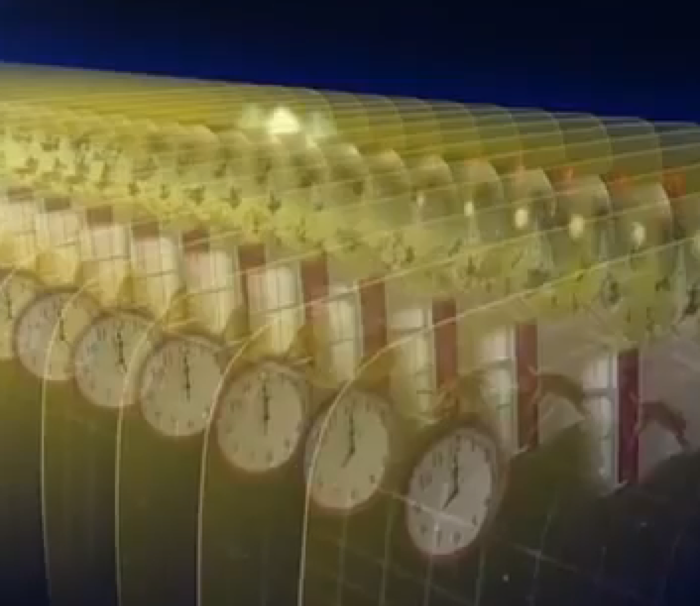
Brian Greene explains why space and time are part of a single continuum and why that means that everything that will ever happen HAS ALREADY HAPPENED somewhere in space-time.
As I try to explain in the book, this means it is pointless to worry about what might happen in the future. If it HAS ALREADY HAPPENED, what’s the point of worrying about it? All we can do it wait to catch up to the future to see what did/will happen.
“Past, present, future all equally exist.”
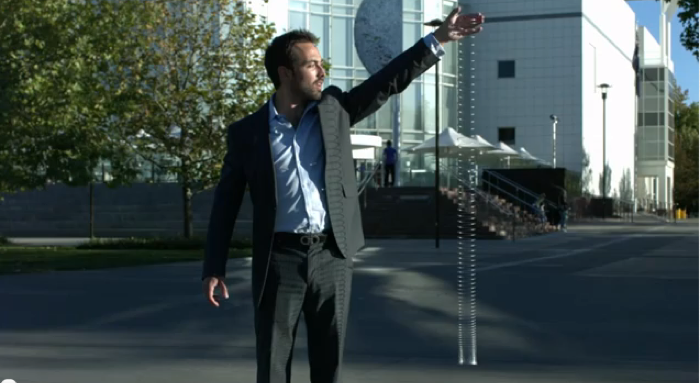
The answer is – I have no idea! However the below video and the RadioLab podcast “What A Slinky Knows” bring up some interesting philosophical issues about time, information and the nature of our perceptions.
What happens to the bottom rung of a slinky when you let go of the top rung?
Sam Harris has posted a new article today called “Life Without Free Will“.
He starts off:
One of the most common objections to my position on free will is that accepting it could have terrible consequences, psychologically or socially. This is a strange rejoinder, analogous to what many religious people allege against atheism: Without a belief in God, human beings will cease to be good to one another.
And concludes:
Recognizing that my conscious mind is always downstream from the underlying causes of my thoughts, intentions, and actions does not change the fact that thoughts, intentions, and actions of all kinds are necessary for living a happy life—or an unhappy one, for that matter.
I haven’t been noticeably harmed, and I believe I have benefited, from knowing that the next thought that unfurls in my mind will arise and become effective (or not) due to conditions that I cannot know and did not bring into being. The negative effects that people worry about—a lack of motivation, a plunge into nihilism—are simply not evident in my life. And the positive effects have been obvious. Seeing through the illusion of free will has lessened my feelings of hatred for bad people. I’m still capable of feeling hatred, of course, but when I think about the actual causes of a person’s behavior, the feeling falls away. It is a relief to put down this burden, and I think nothing would be lost if we all put it down together. On the contrary, much would be gained. We could forget about retribution and concentrate entirely on mitigating harm. (And if punishing people proved important for either deterrence or rehabilitation, we could make prison as unpleasant as required.)
Lawrence Krauss a Canadian-American theoretical physicist who is a professor of physics, Foundation Professor of the School of Earth and Space Exploration, and director of the Origins Project at Arizona State University. He is the author of several bestselling books, including The Physics of Star Trek and A Universe from Nothing. He is an advocate of scientific skepticism, science education, and the science of morality.
Here’s what he had to say about free will in a recent article in The Guardian:
“Moreover, that many moral convictions vary from society to society means that they are learned and, therefore, the province of psychology. Others are more universal and are, therefore, hard-wired – a matter of neurobiology. A retreat to moral judgment too often assumes some sort of illusionary belief in free will which I think is naive.”
It’s been my experience that when someone genuinely stops believing in free will, there are a plethora of emotional and psychological benefits that follow. The most fascinating thing, to me, about the belief in free will is that when you actually look at it, it’s so completely and obviously bullshit. Anyone who has meditated will know that even when you are trying not to think, thoughts still appear in your head willy-nilly. You can’t turn them off at whim. All of us, I’m sure, have had the experience of trying to get to sleep at night and not being able to “switch off”. If we had control of the thought process, surely this would be simple – yet we find it’s impossible.
So it should be obvious to us that we aren’t in control of our thoughts, and yet the majority of people continue to believe that they are – and that creates problems, myriad problems. So many emotional problems are connected to the idea of having free will. Guilt, anger and regret cannot exist without the idea of free will. Why wouldn’t we all want to live without guilt, anger and regret?
We can and it’s so simple, it’s ridiculous. All we need to do is pay attention to the fact that free will doesn’t exist and hey presto – those emotions disappear. They have to – they have no foundation left to build upon.
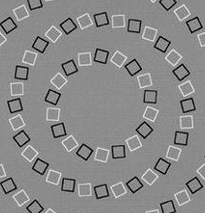
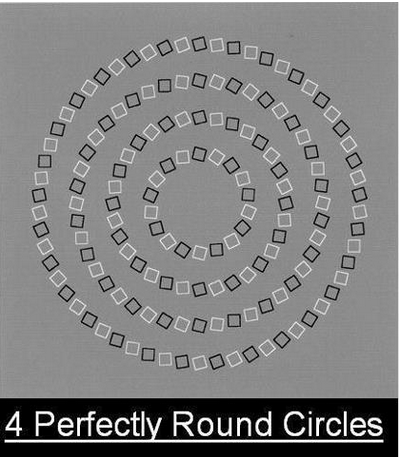
Another mind-bending illusion. Hard to believe that what-you-think-is-real is NOT, isn’t it?
Yet the facts remain.

I have set up a Facebook Group for us to discuss the concepts and ideas contained in the book. Feel free to join up!