I often hear people say they have seen that the self / ego is an illusion and that they are “the one” – but then they lost it. They often say things like “the ego came back” or “life got in the way”.
I’m hear to tell you that the realisation that can be lost is not a real realisation.
Realisation is a binary event – you either have it or you don’t. There’s no middle ground. There’s no partial realisation. It’s black and white. If you think you’ve had it and then lost it – you never had it in the first place.
It’s okay – that’s just sometimes part of the journey, a step in the process. But if you’re fooling yourself by thinking that you “had it” and then “lost it”, then you’re not going to make much progress.
Realisation (aka awakening aka enlightenment) is the direct recognition that the idea that you were somehow separate from the rest of the universe (aka “the one”) was an illusion. It’s the single most profound experience there is. It’s the end point of every spiritual journey. There’s nothing to do afterwards. It’s waking up from the dream of the self. This is not something that you can “forget” or “lose”. It’s the total annihilation of the idea you’ve had you’re entire life of who and what you are. This isn’t like putting your iPhone down somewhere absent-mindedly after a night on the booze and then not being able to remember the next morning where you left it. This is more like being told by your doctor that you have stage 4 cancer and only a month to live – no matter what happens next, you aren’t going to forget.
The other misnomer we should talk about is the idea that realisation is a slow process. That’s bullshit. It happens suddenly. That’s because there is no middle point between “I’m separate” and “I’m the entire universe”. Again – it’s binary. There are only two positions for the light switch – on and off. There’s no half on, like there’s no being half pregnant.
Sure – you might take years or even decades to get to a point where you have the realisation. That’s not debatable. But that’s doesn’t mean the process of realisation is slow. It just means you weren’t ready to let go of your illusions for a long time.
And once the realisation has happened, there is no putting the cat back into the bag. No matter what happens next – no matter what kind of shit life throw at you, it doesn’t matter, because you know – YOU KNOW – that it’s all an illusion. There isn’t – THERE CANNOT BE – the slightest confusion about it.
Sometimes people try to suggest that post-realisation, old habits still crop up and that somehow can make you forget that the self is an illusion. That’s bulshit. It’s true that the mind will continue to throw thoughts up post-realisation. But those thoughts, if they pertain to the idea of a separate self, have nowhere to land, so they immediately evaporate.
Any thought that appears that hints at anything to do with a separate entity, an “I” (as in “I’m not worthy”) or a “they” (as in “how could they do that to me?”) or a judgment (as in “I wish things were different”) cannot exist beyond the moment because once we have realisaed that the self is a total fabrication, the ideas of “I”, “they” and judgment completely cease to exist. They cannot possibly exist post realisation. So while thoughts like “I’m not worthy” might pop up, they have nowhere to land – they cease to make sense and, therefore, cease to be a problem.
People also sometimes say “it feels like we have free will”.
No. No it doesn’t. Here’s why.
Your brain doesn’t come pre-pacakged with models for interpreting data. When you’re born, you don’t come out of your mother with fully constructed ideas of how the world works. You don’t know shit about free will. You can’t – the parts of your brain that handle abstract concepts and language don’t finish growing until you’re about two years old.
And yet, during those first two years, your senses and your brain are still taking in sensory data. You just can’t do much with it beyond simple reactions.
Eventually, as you get older, someone explains the rudimentary concept of free will to you – that you are somehow responsible for your actions – and you believe them. From that moment on, you interpret data using the model of “I have free will”. It doesn’t *feel* like you have free will – that’s just the model you use to interpret sensory data.
If you have the model “I don’t have free will”, then your brain will take in the exact same sensory data as before, but you’ll interpret it differently. It doesn’t feel any different – you just have a different model for making sense of the experience.
It’s like that story in Stephen Covey’s book “The Seven Habits Of Highly Successful People” where he’s sitting on a train and there’s a father sitting across from him who has two young sons who are making a lot of noise and annoying other passengers while the father just sits there blankly. Covey finally has enough and asks the father to do something about his children, thinking he must be the worst parent around. The father snaps to attention, apologises, and explains that they are coming home from the children’s mother’s funeral. She died suddenly in a car accident a few days prior.
All of a sudden, Covey’s model for interpreting the data of the father and the noisy children is turned upside down. He doesn’t see him as a useless father and rude citizen, but as someone lost in grief whose children are obviously also grieving and don’t know how to process the untimely death of their mother. (I’ve probably got some of the details of the original story wrong, I read it 20 years ago, but you get the idea.)
When our models about how and what we are fundamentall change, we’ll never look at ourselves – or the people around us – in the same away again.
Until that realisation occurs, however, you may have glimpses or little insights – but don’t mistake that for the actual realisation. Stick to it. Persist. Find out if the self / ego exists. Don’t give in until it’s all gone – permanently. This is the only way to freedom.
The fundamental need that every single person has is to “fill the hole”. We struggle to name “the hole”, but it exists inside all of us. It manifests itself in different ways for different people, depending on their genetics and conditioning and environment, but it’s the same hole. It’s that feeling that you are irrevocably alone, that nobody truly understands you, the feeling that life is almost impossibly hard sometimes and happiness is, at best, fleeting, often associated with the bottle or the needle or fucking or falling head over heels in love. For others the hole is filled with the need for speed, the adrenaline rush, the feel of wind whipping across their face, or the feeling of risk associated with betting it all on the roll of a dice, a horse, or a hand of cards. For others it’s the feeling that is only satiated by yoga, hiking, riding, church, weightlifting, playing chess or some other activity that tunes out their mind for a while and let’s them lose themselves in the moment. And, sadly, for many it’s the feeling they get from losing themselves in work, particularly sad for those who don’t actually get any genuine fulfillment or enjoyment out of their work, but use it simply to cover up the hole.
So… what causes the hole?
The hole is what happens when we forget our true nature. It’s calling us back to remember who and what we really are. We weren’t born with the hole – it was something we learned as children and perfected as adults.
The hole starts to form when, from the day we are born, our parents tell us that we have a name. Even though we don’t understand the concept of name and identity for a couple of years, the conditioning starts at birth. We are programmed by our parents first, then by society as a whole, to believe that we are somehow separate from the rest of the universe, with bodies and minds and souls and free will and individual responsibility and all of the pressure that those concepts carry with them.
The truth, of course, is that none of these things are true. You are now what you have always been and will always be. You are the entire universe, experiencing itself. The universe is one thing, one entity, and all of the separation that we perceive is merely an illusion of the mind and the senses. Once we understand that our perspective has been misguided, that we are not separate but are, in fact, the entire universe, the hole disappears and becomes… whole.
It’s all a matter of perspective.
Remember that films “Honey I Shrunk The Kids!”? Let’s imagine for a moment that you were shrunk down small enough to fit inside a human cell. You can see all of the organelles doing their jobs, moving about, building new cells and doing whatever organelles do. It might look like each of the organelles was an individual organism with its own sense of purpose and destiny and perhaps even free will. If you zoomed out a level, the cell itself could be considered an organism, being born, creating a new version of itself through mitosis, and eventually dying. So which is the ultimate organism? The organelle or the cell? You zoom up another level and see the human that the cell makes. That human doesn’t care about individual cells. It doesn’t think of them as unique individual organisms with lives and deaths and an individual existence. The human thinks of itself as the ultimate organism, as the only life and death cycle that matters. But of course, if we zoom out another level, there is a planet of humans and other organisms making up the meta-organism of the planet. Zoom
out another level and we see the solar system as a cell, with Sol as the nucleus and the other planets revolving around it like particles. Keep zooming and we see the solar system as a tiny component of the galaxy and the galaxy as a tiny component of the universe.
I know you feel special. I know you feel like you are in control of your life. I know because I used to think like that too. However the truth is far more interesting and life without the hole is much more enjoyable. I’m sure the organelles and the individual cells would think they were special too if they were sentient and self-aware. But being self-aware doesn’t make you any more of a separate entity that the organelle is.
According to cosmologists, about 13.8 billion years ago the entire universe was the size of an atom. Consider that for a second. Everything that has ever existed or ever will exist – all matter and energy across the entire universe – was once compressed down into something much, much smaller than this dot on the page. Does that dot appear to you like billions of things? Or just one thing? Imagine that dot expanded a thousand times in size. Would it still be one thing? What if it expanded a million times? Or a trillion, trillion times? (It still wouldn’t be as big as the universe, by the way.) It would still be one thing. So, too, is the universe, no matter what your senses or your mind tells you.
Zooming back down to cell size again, let’s keep doing and zoom down even smaller. The cell is made of molecules. The molecules are made of atoms. The atoms are made of sub-atomic particles that, according to quantum physics, are really “probability waves” that occupy all of space and time until observed. If you are made of something that occupies all of space and time, what does that make you?
Infinite. Timeless. Without beginning and without end. How does that correspond with your day-to-day reality of seeming to be a body-mind that makes decisions and lives a life with a beginning and an end?
It’s all a matter of perspective. What seems to be is not necessarily what is. The people on my television appear to be real – but I know it’s an illusion. They are just coloured dots on a screen, too tiny for my senses to perceive from a distance. The sky appears to be blue, but again it’s an illusion, caused by the short wavelength of blue light being scattered around the atmosphere. We have learned that these events, while appearing obvious to our senses, are in fact not the truth. The same applies to our feeling that we are special, separate individual entities. It’s another illusion of the senses, not supported by science.
Letting go of this illusion and accepting the truth – that you are the WHOLE universe – will fill the HOLE – once and for all.
Once we have seen our true nature, there is no going back. It is a permanent transformation. It’s like a blind person being given the gift of sight. You’ll never again think of yourself in the old way.
Enlightenment (aka realization) happens suddenly although it may take years of work to be ready for the sudden insight. However it can also happen quickly, if the subject is ready for it. All that it takes is a few minutes is self-inquiry and the willingness to accept the conclusions of your investigation. No special practice or study is required. No particular school of philosophy or religion has any exclusivity to enlightenment. They all talk about it in some fashion of another, although the blade is often dulled by the fact that most of the teachers of the schools (whether they call themselves priest or shaman or philosopher or guru) have not had the direct insight into their own true nature and instead rely on repeating the words of others.
All that is required for enlightenment is the direct realization that you do not exist as an independent being. There are a number of paths we can take to arrive at that realization and none are superior to others. I discuss three of them in “The Three Illusions” but there are others.
When we realize, once and for all, the ultimate statement – “I am That / God / The Universe / All / The One” – then there is nothing else to be done. As the Xin Xin Ming says, “The Great Way is not difficult for those who have no preferences.” All of our problems are predicated on the concept that we are “individual” – separated from the rest of the universe, with our own free will. Once this concept is seen to be false, everything else falls into place. There is nothing to be done and nothing to strive for. If you are already everything (God, The Universe, etc), what is there to do? And who is there to do it? The universe exists and functions according to its nature. You, me, and everyone and every thing *is* the universe. Nothing more and nothing less. The universe is one functioning entity, where nothing can be added and nothing can be removed. In mathematics, we would call is a “set”.
We might think of it as a computer game. Think about a modern console game, like Halo or Call Of Duty. The game contains characters, buildings, inanimate objects, cars, trees, etc. But they are all “the game”. The game is the set of all of those “things”. None of those things is separate from the game. Take away the DVD or console that the game runs on, and you take away the characters and other objects. They are part and parcel of the game.
We, then, are part of the game called “the universe”. It might actually be software running on some form of computer (that’s a theory favoured by at least a small number of theoretical physicsts). The universe might be a lot larger that the console game, but we shouldn’t let its size stop us from realizing that it is still one functioning thing. And we, my friends, are it.
It is so simple that most overlook it, even when given to them freely.
They complicate it with ideas and concepts, with prejudice and fear.
They believe they are not worthy of it and so delay their acceptance of it.
This is not their fault – they do what they must.
The Great Teaching has not changed and never will change. It has been misunderstood and corrupted by some, but the teaching itself always remains pure and available for those who are ready to hear it.
The Great Teaching is this:
You are the entire universe.
There is nothing other than the universe. And you are it.
All perception of separateness from the universe is illusory, a product of the limitation of the senses and the mind, and a product of misunderstanding the evidence.
Every being, human and non-human, every inanimate object, every atom, every energy field – is simply an aspect of the universe which functions as a whole unit. This unit has been called many names – God, consciousness, awareness, the oneness, love – and many others, however they are all simply different names for the universe.
Realizing this, and accepting it to the core of your identity, is called liberation, enlightenment, and many other words in many other languages. It is, however, the same experience.
You are not separate from the universe – you never were and you never will be.
You can no more be separate from the universe than a wave can be separate from the ocean.
You are the universe observing itself.
There is nothing to achieve and nothing to gain – only this realisation that you are the universe.
Your life is determined by laws you don’t even understand – whether we call them the laws of physics, the laws of chemistry, or the laws of karma.
You have no free will. You have zero control over events in your life or the lives of others. You are merely witnessing these events, playing a role determined by a million other factors at play in the universe.
The Great Teaching is only this – that you are not separate – you are the universe. This is not an analogy. This is not a metaphor. This is a simple statement.
There is only the universe, functioning as one thing, one unit, inseparable, and eternal (for all time exists within the universe).
Understanding this will bring permanent peace, harmony and serenity into your life.
Not understanding this will leave your life in cycles of confusion and disharmony.
What is the difference between dreams and reality?
One obvious answer is that we wake up from dreams but we don’t wake up from reality. But does the dreamed person in our dreams ever wake up from the dream? Or does their ‘reality’ just end for them? One minute they are living inside their reality and the next it just stops. We wake up from that dream. As far as we’re concerned the dream is over. But what does the dream person experience?
Inside the dream there is a complete universe. It has the appearance of depth and solidity that we also experience when we are awake. The laws of physics are sometimes different and we meet with people who are deceased. However inside the dream, these things appear to be totally normal. They are all created by our mind. We can walk through forests and cities, lie on the beach or make love. We eat, drink and experience the full gamut of life. How can we tell that the waking experience is not a dream? How do we know for sure that when we sleep, that isn’t a waking up experience for another dreamer, the dreamer who is dreaming us?
Of course, we know that the waking experience is similar to dreams in many ways. We know that the world our senses perceive isn’t really as it seems. We know that the objects around us aren’t really solid – they are made of atoms which are themselves 99.9999999999999999% empty space (http://lunarscience.nasa.gov/articles/beware-of-images/). The apparent depth and solidity that we perceive are all creations of the mind. This is, of course, also true of your own body and those of the people around you. Had you been born with different senses, able to perceive atomic reality, you would perceive a very different world around you.
Enlightenment is, in a way, realising that the waking world is just a creation of our minds. It is realising that as real and solid as it might seem, the waking world is really just a series of concept and ideas created by our minds. And, off course, the existence of the mind is itself just a dream. Seen at an atomic level, there is no brain, no body and no mind. These are also just ideas.
Inside our sleeping dreams, we also perceive bodies who seem to think and act and experience the world around them. Those bodies, brains and minds have no objective reality outside of the mind that is dreaming them. Why, then, is it so hard for people to accept that this world, too, is merely another dream?
Accepting that the waking world is another dream, devoid of objective reality outside of our minds, is the secret to permanent peace. It is lucid dreaming in the waking state. We participate in the world, totally accepting that is a dream and acknowledging that the dream has no objective reality. Once we accept that our own concept of self, of the ego, the “I”, is a complete fabrication, it is impossible to take it seriously like we once did. If you were asleep and having a lucid dream (i.e. aware that you are in a dream), would you worry about anything happening inside the dream? Or would you just go along with it and enjoy the ride?
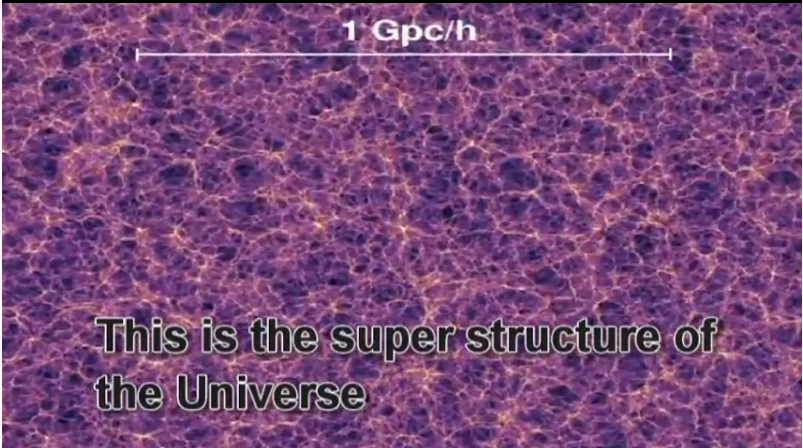
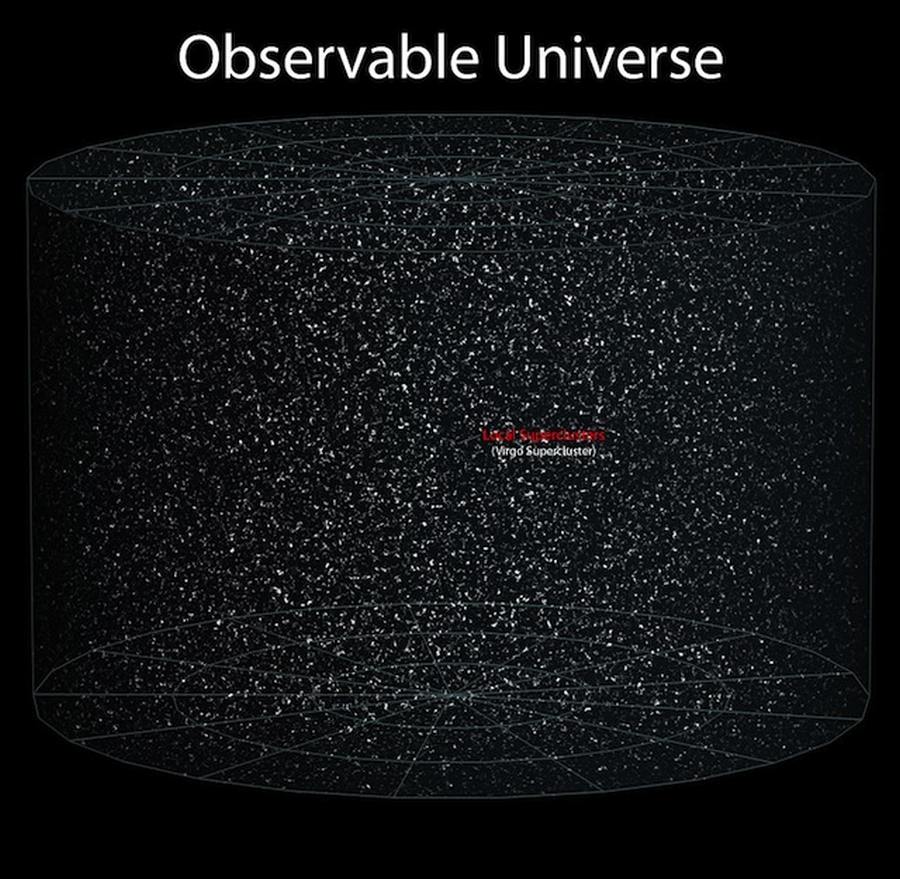
I got a very rare email from Sailor Bob himself this morning… I think this is first email he’s sent me in ten years! Anyway, he sent me this video which I think will blow your mind. I chatted with Bob on the phone last week about the scientific versus the mystical approach to non-duality and he agreed with me that we need to move away from the mysticism so more people might get their heads around it. And then he sends me this. Go figure.

 Posted with Blogsy